

CBRN for Civilians
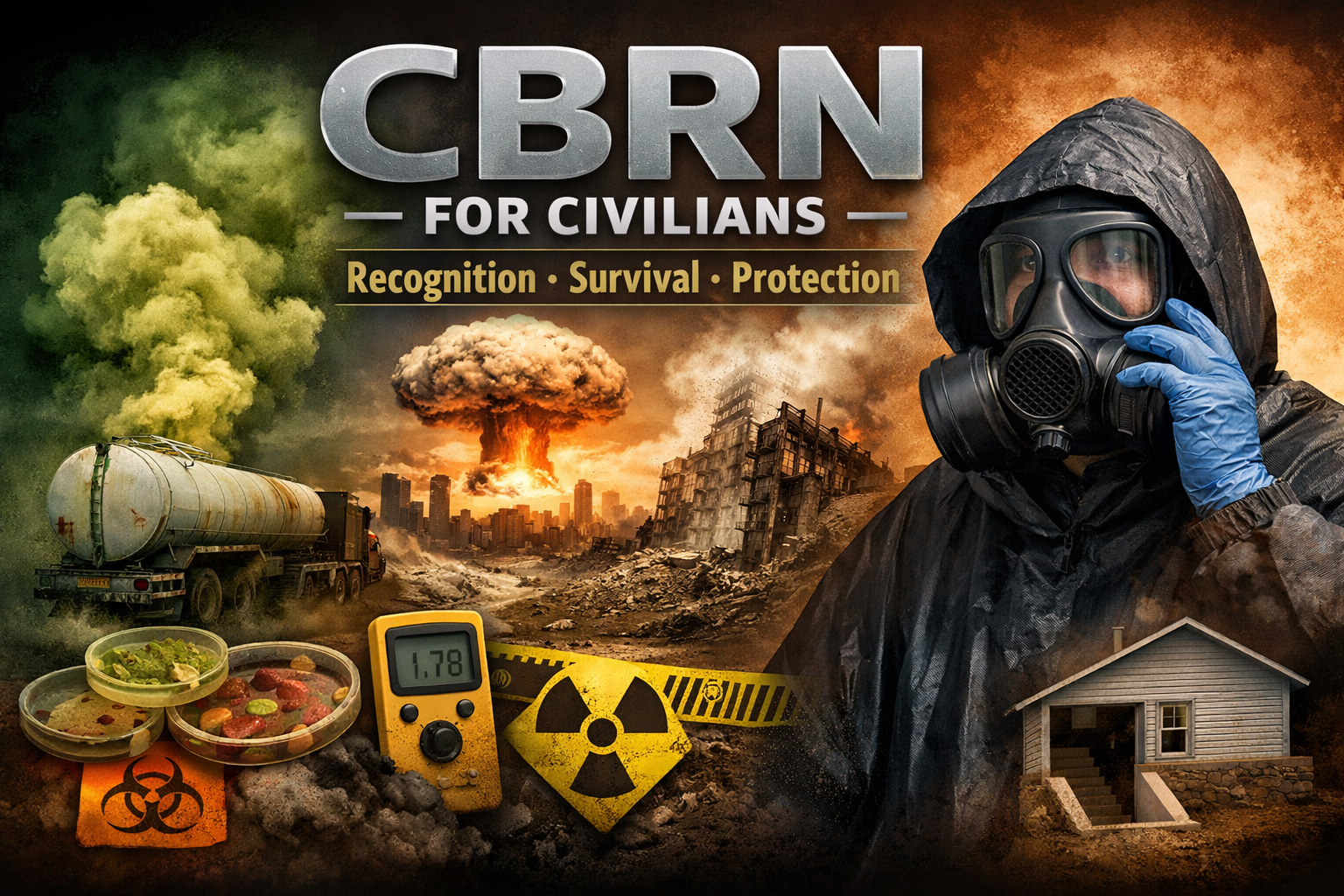
Recognition, Survival, and Household Protection
Bring note-taking materials
This course provides civilians with practical instruction on recognizing and surviving Chemical, Biological, Radiological, and Nuclear (CBRN) hazards. The focus is not on identifying specific agents, but on understanding observable conditions, recognizing early indicators of exposure, and taking correct actions to reduce injury and prevent secondary contamination.
Students learn how CBRN hazards present in real civilian environments, including industrial accidents, transportation incidents, explosive events, and public health scenarios. Instruction emphasizes what civilians can do during and immediately after an exposure event: movement, sheltering, personal protection, and decontamination.
The course includes clear instruction on:
- Visual, sensory, and environmental recognition of CBRN hazards
- Chemical releases, blistering (vesicant) exposure, and toxic industrial materials
- Explosion-driven radiological exposure and fallout recognition
- Immediate survival actions during nuclear events, including body positioning and sheltering
- Realistic use of personal protective equipment and improvised barriers
- Decontamination principles to reduce injury and prevent spread within the household